
Could a single piece of furniture actually be the secret to reclaiming your home from the creeping chaos of daily life? We often treat storage as an afterthought, yet the right side board acts as the silent anchor of a room, holding everything together while making a bold style statement. We’ve all felt that frustration when a beautiful marble or ceramic dining table is overshadowed by stray linens and paperwork, or the fear that a new addition might feel too bulky for a modern Irish floor plan.
You deserve a living space that feels curated rather than cluttered. In this 2026 guide, you’ll discover how to choose a side board that perfectly balances sophisticated contemporary design with the deep, practical storage needed to hide away the mess. We’ll walk through the latest trends in sustainable materials and smart dimensions, ensuring your next investment is a high-quality focal point that brings both elegance and order to your home for years to come.
Key Takeaways
- Learn why the contemporary side board has evolved from a traditional buffet into a versatile, sleek essential for the modern Irish home.
- Master the “Golden Rule” of proportions to ensure your furniture fits perfectly while leaving enough clearance for effortless movement.
- Compare the timeless durability of solid oak and walnut against the sleek, resilient finish of modern ceramic materials.
- Discover how to transform your storage unit into a sophisticated home bar or a tech-ready hub with smart cable management.
- Explore the Red Tree philosophy of affordable luxury, where high-end design meets the practical needs of everyday family life.
What is a Side Board and Why is it Essential in 2026?
The modern side board has undergone a radical transformation, moving far beyond its historical roots as a place to simply store fine china. In 2026, these pieces are celebrated as versatile storage units designed to bring order to both dining and living areas. They represent a shift toward furniture that works harder, offering a blend of tactile materials like fluted oak or matte ceramics with the practical necessity of internal shelving. This evolution reflects our desire for homes that feel curated rather than cluttered.
We’ve seen a steady move away from the heavy, dark wood buffets of the 20th century toward the sleek, low-profile credenzas that define contemporary Irish homes. To appreciate this journey, it helps to look at the history of What is a Sideboard? and how it became a staple of domestic life. Today, homeowners prioritize pieces that balance hidden storage for tech and linens with a broad surface area for curated displays of art, lamps, or greenery. It’s about creating a focal point that feels personal and polished.
The side board serves as the functional anchor of a contemporary dining room, grounding the space while bridging the gap between utility and design.
The Difference Between a Sideboard, Buffet, and Credenza
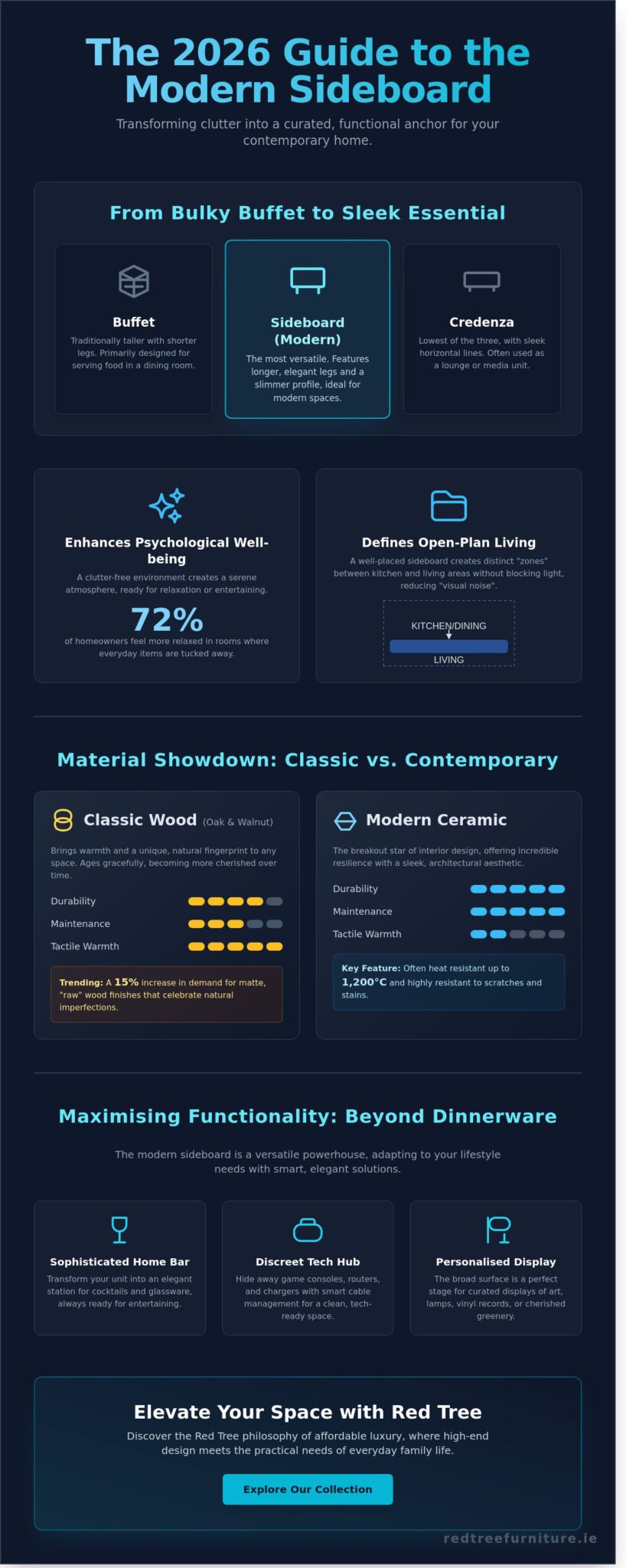
Terminology often overlaps, but subtle design cues define each category. A buffet typically sits on shorter legs and is taller, designed specifically for serving food in a dining room. In contrast, a modern side board usually features longer, more elegant legs and a slimmer profile, making it the most versatile choice for Irish interiors where floor space is at a premium. Credenzas are often the lowest of the three, frequently used in lounges as media units because of their sleek, horizontal lines. This shift toward multi-functional design means a single piece can transition from a hallway catch-all to a sophisticated lounge centerpiece seamlessly.
The Role of Storage in Modern Open-Plan Living
Open-plan living remains the dominant architectural trend in Ireland, yet it presents the constant challenge of “visual noise.” A well-placed sideboard creates distinct “zones” between a kitchen and a living area without blocking natural light. It acts as a low-level boundary that helps define the purpose of a space. Beyond the physical layout, there’s a clear psychological benefit to a clutter-free environment. Data from 2024 interior design surveys indicate that 72 percent of homeowners feel more relaxed in rooms where everyday items are tucked away. By hiding away game consoles, napkins, or candles, you create a serene atmosphere that is always ready for entertaining guests at a moment’s notice.
Selecting the Perfect Material: From Timeless Wood to Modern Ceramic
Choosing the right material for your side board is about more than just looks; it’s a commitment to how you live. While the history of the sideboard shows a shift from purely functional medieval storage to grand 18th-century status symbols, 2026 design trends focus on “tactile durability.” This means selecting surfaces that feel premium to the touch while handling the daily chaos of a busy Irish home. Whether you’re hosting a festive dinner or storing the family’s best linens, the material defines the room’s energy.
Wooden Sideboards: The Classic Choice
Solid oak and walnut remain the gold standard for longevity in 2026. Their natural grains provide a unique fingerprint for every piece, ensuring your furniture feels curated rather than mass-produced. We’ve noticed a 15% increase in demand for matte, “raw” wood finishes that celebrate organic imperfections. These textures bring an immediate sense of warmth to a room, grounding modern spaces that might otherwise feel too clinical.
When you’re pairing wooden storage with contemporary dining furniture, consistency is key. You don’t need a perfect match, but keeping the undertones similar creates a sophisticated flow. Maintenance is straightforward: solid wood benefits from a light oiling every 12 months, while high-quality veneers simply require a quick wipe with a microfiber cloth. This makes wood an excellent choice for those who value a piece that ages gracefully over decades.
Contemporary Ceramic and Marble Finishes
Ceramic has emerged as the breakout star of modern interior design. It’s incredibly resilient, often resisting heat up to 1,200 degrees Celsius and shrugging off scratches that would mar a wooden surface. Many homeowners are now opting for ceramic-topped sideboards to create a seamless visual link with their dining tables. This creates an architectural, high-end look that’s particularly effective in open-plan living areas.
- Ceramic: Offers a sleek, industrial profile and is virtually non-porous, making it immune to wine stains.
- Marble: Provides an unmatched sense of formal luxury, though it requires more care to prevent etching from acidic liquids.
- Glass Accents: Fluted or smoked glass doors add depth without the visual bulk, perfect for displaying curated glassware.
The sensory contrast between materials is a defining trend this year. Pairing the cool, smooth touch of a stone top with the textured warmth of a timber frame offers a “best of both worlds” aesthetic. It’s a practical way to introduce luxury into your home without the intimidating price tag often associated with bespoke stone furniture. If you’re ready to see these textures in person, you can browse our latest collection to find a finish that speaks to your personal style.
Finding the Right Scale: Dimensions and Placement Strategies
Choosing a side board requires a balance between visual weight and physical footprints. The “Golden Rule” of interior styling suggests that your unit should be proportional to your dining table to maintain harmony. Ideally, your side board should be roughly the same height as your dining table, or slightly taller by 5 to 10cm if you intend to use it as a buffet for serving food. If the piece is significantly shorter than the table, it can feel lost; if it’s too tall, it may dominate the room and make your dining set look undersized.
Measuring for Success
Getting the measurements right prevents the frustration of a beautiful piece that blocks a doorway or feels cramped. Follow these steps to ensure a perfect fit:
- Measure the “Swing Space”: Beyond the width and depth of the unit, you must account for door and drawer clearance. Leave at least 60cm of open floor space in front of the unit so you can stand comfortably while reaching inside.
- Consider the Depth: While 45cm is standard, the depth of the unit matters immensely in narrow Irish hallways. A hallway that’s only 90cm wide won’t accommodate a standard unit comfortably. In these tight spaces, seek out “slimline” designs that stay under 35cm deep.
- Check Your Floors: Many older Irish homes have slightly uneven floors. For long, multi-leg units, this can cause doors to hang unevenly. Always check your floor level before installation; you might need a unit with adjustable feet to keep everything square.
Layout Ideas for Different Room Sizes
In smaller dining rooms, heavy dark woods can feel overbearing. Instead, use light oak or mirrored surfaces to reflect light and create the illusion of extra square footage. If you’re working with a restricted floor plan, keeping the floor visible with a “floating” wall-mounted unit or a piece with tall, slender legs will make the room feel airier.
For expansive, open-plan living areas, a “wide” side board of 180cm or more serves as a powerful statement piece. It anchors the room and provides a natural transition between the kitchen and lounge areas. Current modern furniture trends emphasize these larger, sculptural forms that prioritize organic textures and clean lines. To finish the look, focus on alignment. Centring your furniture under large wall mirrors or a curated gallery wall creates a sense of intentional, professional design.
Don’t limit your thinking to the dining room. Low-profile credenzas are becoming the preferred choice for housing media equipment under wall-mounted TVs because they hide cables and clutter while maintaining a sleek, modern feel. In a home office, a tall side board can replace a traditional bookshelf, offering hidden storage for files and a sophisticated surface for a printer or table lamp.
Maximising Functionality: Beyond Traditional Dinnerware Storage
Modern living demands more from our furniture than simple storage. A contemporary side board acts as a versatile hub rather than a static cabinet. By 2026, homeowners are prioritising pieces that offer adjustable shelving to accommodate everything from tall vases to heavy coffee table books. Soft-close hinges and drawers have moved from being a luxury to a standard expectation, preventing the wear and tear of daily use in a busy Irish household. These smart solutions ensure your furniture remains as quiet and durable as the day you bought it.
The Ultimate Home Bar Setup
Converting your side board into a sophisticated drinks station adds a layer of quiet luxury to your hosting routine. Use the top surface to display a curated selection of glassware, a polished cocktail shaker, and perhaps a fresh bowl of citrus. It’s a styling trick that makes the room feel lived-in yet intentional. Inside, deep cupboards provide the perfect height for standing spirits and wine bottles, keeping the visual clutter of labels hidden from view. This setup works beautifully when positioned near a set of elegant dining chairs, creating an inviting social corner that encourages guests to linger long after the meal ends.
Hidden Tech and Media Storage
Many Irish homeowners are now choosing a side board over a traditional TV unit. This shift is driven by the desire for extra height and more substantial storage capacity. A 75-inch screen often looks more balanced on a solid sideboard than on a narrow, low-slung stand. To keep the aesthetic polished, use cable management hacks like adhesive clips or pre-drilled ports to route wires discretely. If you’re storing gaming consoles or routers inside the cupboards, ensure there’s at least 5cm of clearance around the equipment. This allows for proper ventilation and prevents overheating, ensuring your tech stays safe while remaining completely out of sight.
Organising the interior is where the real magic happens. Consider these practical tips for a seamless home:
- Linens and Textiles: Store table runners and napkins in the top drawers to keep them crisp and accessible.
- Cutlery Care: Use felt-lined dividers to protect silver and prevent scratching during drawer movement.
- Seasonal Decor: Use the lower, harder-to-reach shelves for bulky items like Christmas centerpieces or Easter displays.
Whether you’re hiding the kids’ tablets or showcasing your gin collection, the right piece makes life feel more organised. Discover your style and explore our latest versatile storage solutions to transform your living space.
Elevating Your Space with Red Tree Furniture
Red Tree Furniture operates on a simple, steadfast philosophy: design-led furniture shouldn’t ever compromise on daily function. Our collection is carefully curated to offer a sophisticated balance of textures. We explore the interplay between the sleek, cool surface of ceramic, the organic warmth of sustainably sourced wood, and the sharp, architectural lines of metal finishes. This isn’t just about filling a room; it’s about selecting pieces that resonate with your personal style while solving the practical puzzles of modern storage.
Choosing a family-owned Irish business means you’re investing in more than just a product. You’re opting for a level of quality control and reliable service that only a local team can provide. We understand the Irish market because we live in it. From the initial spark of inspiration on our website to the final step of our national delivery service across all 32 counties, we ensure the process is seamless and stress-free. Our team handles every item with the care you’d expect from a neighbor, ensuring your new furniture arrives in pristine condition.
Our Design-Led Approach
We’ve built our reputation on the concept of affordable luxury. Every piece in our showroom is selected to prove that high-end aesthetics don’t require an intimidating price tag. We source contemporary designs that specifically suit the unique character and proportions of Irish homes, whether you’re furnishing a new-build city apartment or a traditional rural retreat. Tactile quality is our benchmark. We want you to feel the grain of the oak and the smoothness of the stone. When you choose a side board from our range, you’re choosing a piece where the materials speak for themselves.
Creating a Cohesive Look
Achieving a professional interior design look is simpler than it seems when you have the right foundation. You can effortlessly pair your storage solutions with a dining table from our matching collections to create a sense of flow and harmony in your open-plan space. Once your furniture is positioned, the final styling is where your home truly comes to life. Consider these expert tips for a polished finish:
- Layered Lighting: Place a slim, metallic lamp on one end to create a warm pool of light for evening ambiance.
- Textured Reading: Stack a few oversized art or travel books to add height and a lived-in feel to the surface.
- Natural Elements: Use a ceramic vase with dried eucalyptus or a trailing plant to soften the structural lines of the wood.
Our furniture serves as the perfect canvas for these personal expressions. It’s time to move beyond basic utility and embrace a home that feels curated and intentional. Transform your home today with a Red Tree Furniture side board and discover the lasting impact of quality design that fits your lifestyle perfectly.
Bring 2026 Style into Your Irish Home Today
Your home deserves a centerpiece that balances 2026 design trends with everyday practicality. Selecting a side board isn’t just about adding extra storage; it’s about choosing high-quality materials like tactile oak or modern ceramic that stand the test of time. Since 2007, our family-owned Irish business has helped homeowners find the perfect scale to ensure every piece fits seamlessly into their specific floor plans. We focus on design-led contemporary furniture that transforms a simple storage unit into a versatile statement piece for your living or dining area.
As contemporary furniture specialists, we’ve curated a range that brings affordable luxury to every corner of the country. Whether you’re in Dublin or Galway, our national delivery service across Ireland ensures your new furniture arrives safely at your door. It’s time to elevate your interior with a piece that’s as functional as it is beautiful.
Discover our exclusive collection of modern sideboards
We look forward to helping you create a space you’ll truly love living in.
Frequently Asked Questions
What is the standard height of a sideboard?
Most modern units stand between 75cm and 90cm tall. This specific range aligns with standard dining table heights, which makes it easy to serve food or drinks during a dinner party. If you’re placing the piece behind a sofa, aim for a height of 80cm to ensure it doesn’t tower over your seating area. This creates a seamless visual flow across your living space.
Can I use a sideboard as a TV stand?
You can definitely use a side board as a TV stand if the height suits your eye level while seated. Many Irish homeowners choose this option to gain extra storage for media consoles and messy cables. Just ensure the surface depth is at least 40cm to safely support the base of a 55-inch screen. It’s a practical way to blend entertainment needs with sophisticated furniture design.
How do I style the top of a side board without it looking cluttered?
Styling a side board requires a balance of height and texture to avoid a messy appearance. Start with a large focal point like a 60cm round mirror or a piece of art centered above the unit. Group smaller items in sets of three, such as a tall ceramic vase, a medium candle, and a small stack of books. This creates a visual triangle that looks curated rather than cluttered.
What is the best material for a durable sideboard?
Solid oak and walnut remain the top choices for durability, often lasting 25 years or more in a busy home. For a contemporary space that sees heavy use, a ceramic-topped side board offers superior resistance to scratches and heat. These materials handle the daily activity of an Irish household while maintaining an elegant finish. Investing in high-quality timber ensures your furniture remains a timeless centerpiece for decades.
Should a sideboard be wider than the dining table?
A sideboard should ideally be 10% to 20% wider than your dining table to maintain visual balance in the room. If your table measures 180cm in length, a unit measuring 200cm or 220cm creates a grounded, proportional look. This prevents the furniture from looking cramped or undersized against the scale of your dining set. It provides a sense of architectural stability to your dining room layout.
How do I clean a ceramic-topped sideboard?
Clean your ceramic surface using a soft microfibre cloth dampened with warm water and a pH-neutral detergent. Ceramic is non-porous, so it won’t absorb wine or oil spills, but you should avoid abrasive scouring pads that might dull the finish. A quick wipe after meals keeps the surface looking pristine. You don’t need expensive stone sealants or harsh chemicals to maintain that beautiful, high-end look.
Is a side board suitable for a narrow hallway?
Slimline models with a depth of 30cm to 35cm are perfect for narrow Irish hallways. These compact designs provide a handy spot for keys and post without obstructing your walkway. Choosing a floating style or one with tall, tapered legs creates the illusion of more floor space. It makes your entrance feel bright and open while providing 100% of the functionality you need in a high-traffic area.
Do modern sideboards come with adjustable shelves?
Most modern designs feature internal shelves with 3 to 5 height settings to accommodate your specific storage needs. This flexibility allows you to tuck away tall vases or stack dinner plates efficiently. You should check the product specifications for “adjustable shelving” to ensure the piece adapts as your collection of homeware grows. It’s a simple feature that makes a massive difference in how you organize your home.