
Most homeowners treat a mirror as a mere afterthought, but the right piece acts as a structural transformation that can effectively double your square footage without a single renovation. It’s common to feel that your dining space is a bit too dim or that your furniture doesn’t quite pop against the walls. You want a room that feels expansive and inviting for evening dinner parties, yet you might worry about choosing a frame that feels tacky or a size that overwhelms your table.
Finding the perfect large wall mirror for dining room success is about more than just filling a gap; it’s about mastering the art of scale and light. In this 2026 style guide, we’ll show you how to embrace the latest trends, from organic, asymmetric shapes to the quiet luxury of minimalist frames. We’ll provide clear, practical rules on height and width to ensure your new focal point brings balance and sophistication to your home. You’ll learn how to pair textures like smooth glass and natural timber to create a space that feels both professionally curated and deeply personal. Let’s explore how to turn your dining area into a bright, balanced sanctuary that guests won’t want to leave.
Key Takeaways
- Learn why positioning a large wall mirror for dining room walls acts as a “second window,” instantly brightening the space and enhancing the atmosphere of your evening gatherings.
- Master the golden 2/3rds rule to ensure your mirror’s scale perfectly balances your dining table or sideboard for a cohesive, designer look.
- Discover the ideal hanging height and strategic placement secrets to reflect light and beautiful views rather than empty corners or kitchen clutter.
- Explore how minimalist metal frames or warmer ornate finishes can ground your interior design, bridging the gap between high-fashion style and practical domestic life.
- Gain confidence in selecting quality materials and silhouettes that align with 2026 trends and the philosophy of quiet luxury in modern Irish homes.
The Impact of a Large Wall Mirror for Dining Room Spaces
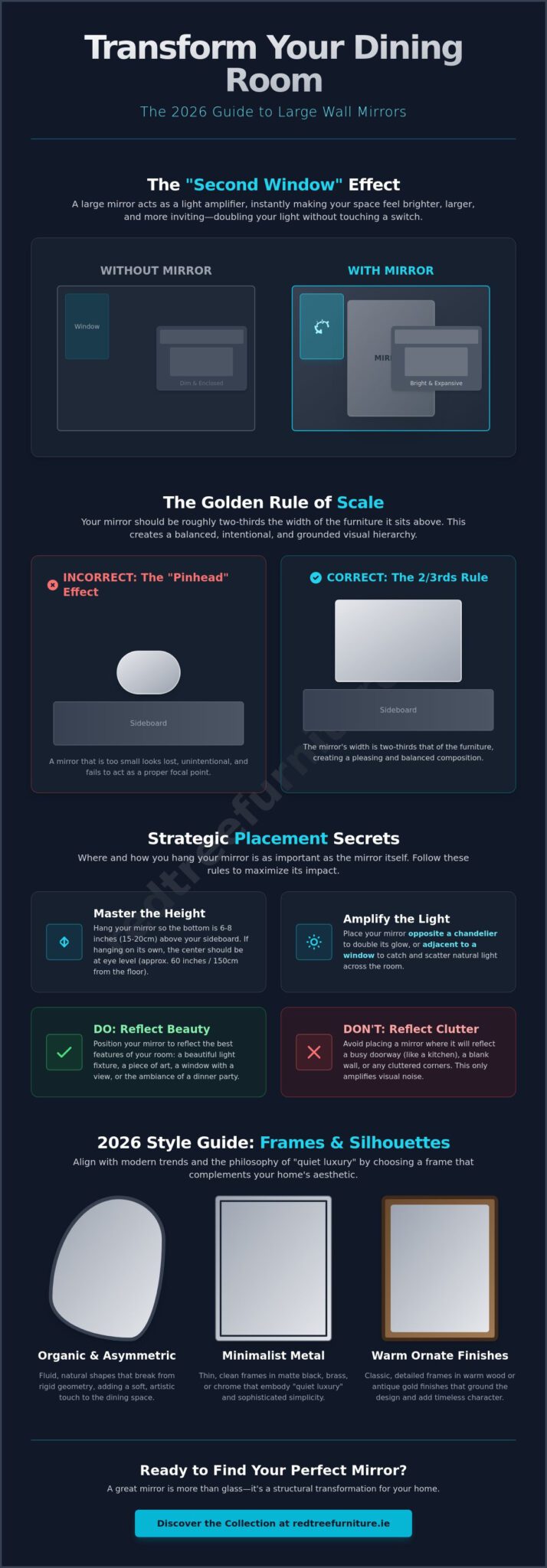
In the context of Irish interior design, where the soft, diffused light of the Atlantic often dictates our indoor atmosphere, a large wall mirror for dining room placement serves as much more than a vanity piece. Designers frequently refer to these pieces as “second windows.” By reflecting the existing light sources, they mimic the presence of an additional portal to the outside world, which is particularly effective in homes with smaller windows or north-facing aspects. This isn’t just about aesthetics; it’s about the psychological shift that occurs when a room feels open rather than enclosed. Historically, the use of a Pier glass demonstrated how mirrors could bridge the gap between windows to create a continuous wall of light, a technique that remains highly relevant in modern Irish architecture.
During evening dinner parties, the mirror becomes a dynamic participant in the conversation. It catches the “light bounce” from candles or low-slung pendants, scattering a warm glow across the table. This creates a sense of “infinite space” that is vital for smaller urban dining areas, where four walls can sometimes feel restrictive. A well-chosen large wall mirror for dining room success acts as a sophisticated anchor, grounding your sideboard or dining set and providing a clear focal point that signals the room’s purpose as a place for connection and celebration.
Maximising Natural and Artificial Light
A mirror’s primary job is to act as a light amplifier. When you hang a mirror opposite a central dining pendant or a grand chandelier, you effectively double the luminosity of the room without adding to your electricity bill. To catch the morning sun, place your mirror on the wall adjacent to a window. This allows the glass to catch the rays at an angle, flooding the room with brightness while avoiding the uncomfortable direct glare that can distract guests during a weekend brunch. This interplay is especially striking when paired with contemporary materials; the reflective surface of the mirror complements the smooth finish of glass or ceramic dining tables, creating a cohesive, high-fashion look that still feels rooted in domestic comfort.
Creating Architectural Depth
Large, flat expanses of plaster can often make a room feel stagnant or unfinished. A mirror breaks up this monotony by introducing a new plane of vision. In narrow dining rooms, placing a mirror on the longest wall creates the illusion of width, tricking the eye into seeing depth where there is none. Visual weight in dining room decor refers to the perceived heaviness or presence an object commands within a space based on its size, colour, and texture. By choosing a mirror with the right scale, you balance the “weight” of a heavy wooden table, ensuring the room feels stable rather than lopsided.
Scale and Proportion: Finding the Right Size for Your Wall
Choosing a large wall mirror for dining room spaces requires a keen eye for proportion. If the mirror is too small, it suffers from the “pinhead” effect, looking lost and unintentional on a wide wall. It fails to command the attention a focal point deserves. Scale is everything. We suggest following the 2/3rds rule: your mirror should be roughly two-thirds the width of the furniture it sits above. This creates a balanced visual hierarchy that feels intentional and grounded rather than cluttered.
For those seeking a more dramatic impact, an oversized leaner mirror is a striking alternative to traditional hanging styles. These floor-to-ceiling pieces provide a grand sense of scale and an effortless, contemporary vibe. However, you must consider the structural realities of your home. Irish homes often feature a mix of solid masonry and modern drywall. A substantial mirror with a heavy frame requires serious support; always ensure you use the correct anchors for your specific wall type to avoid a domestic disaster. Understanding these principles of mirror design helps you treat the glass as a structural element rather than a simple accessory.
The Mirror-to-Table Ratio Guide
When you are choosing the perfect dining table, the wall space behind it becomes part of the design equation. For a standard 4-seater table, which is usually around 120cm wide, a mirror approximately 80cm wide hits that sweet spot. If you have a larger 6-seater or 8-seater setup, you’ll want to move toward mirrors that exceed 100cm in width. A vital rule to remember is that the mirror should never be wider than the furniture beneath it. This prevents the arrangement from looking top-heavy or unstable. Aim for a “breathing zone” of at least 15cm to 20cm between the bottom of the mirror and the top of the table or sideboard.
Vertical vs. Horizontal Orientation
Orientation dictates the “mood” of your room. A horizontal landscape mirror is a brilliant tool to elongate a room, making a narrow dining area feel significantly wider. It follows the natural horizon line of your dining table. Conversely, vertical mirrors are the secret weapon for rooms with low ceilings. They draw the eye upward, creating an illusion of height and loftiness. If a single large wall mirror for dining room use feels too imposing for your taste, consider a gallery wall of smaller, mismatched mirrors. This offers the same light-reflecting benefits while allowing for a more eclectic and personal touch. If you’re looking for the perfect piece to anchor your space, exploring a curated collection of wall mirrors is an excellent place to start.
Strategic Placement: Where and How High to Hang
Hanging a large wall mirror for dining room success is more than just finding a stud in the wall; it’s about creating a harmonious line of sight. A common mistake is hanging mirrors too high, which disconnects the piece from the furniture and makes the room feel unsettled. The industry standard is the eye-level rule. This involves centring the mirror so its midpoint sits approximately 150cm (59 inches) from the floor. This height mimics the placement found in professional art galleries, ensuring the reflection is naturally accessible to anyone standing in the room. When you follow these interior design principles for mirrors, the glass feels integrated into the home’s architecture rather than just floating on a flat surface.
Safety is paramount when dealing with oversized glass. A substantial mirror can weigh upwards of 15kg to 20kg, which requires more than a simple nail. For solid masonry walls common in older Irish homes, use heavy-duty wall plugs. If you’re working with modern drywall, always use toggle bolts or find the vertical timber studs. If you’re at all uncertain about the weight, don’t hesitate to call a professional. A secure mount gives you the peace of mind to enjoy your space without worry.
Styling Over a Contemporary Sideboard
Creating a cohesive vignette often starts with the relationship between your mirror and your storage. When positioning a mirror above a sideboard, aim for a gap of 15cm to 20cm between the bottom of the frame and the top of the unit. This space allows you to layer decor. You might place a pair of tall table lamps or a sculptural vase in front of the glass, which adds immediate depth and texture. During dinner parties, this area transforms into a functional lifestyle station. The mirror will catch the sparkle of glassware and the rich colours of wine decanters, making your serving area feel like a high-end restaurant feature.
The Art of the Reflection
Before you commit to a spot, consider what the mirror will actually show. A large wall mirror for dining room walls should act as a “view-trapper.” If you can angle it to reflect outdoor greenery or a well-kept garden, you bring a sense of nature and calm into the house. It’s also a brilliant way to double the impact of your favourite wall art; placing a mirror opposite a large painting ensures you can enjoy the piece from every corner of the room. However, be wary of “clutter doubling.” If the mirror reflects a busy kitchen counter or a stack of mail, it will make the room feel twice as messy. Choose a reflection that is as beautiful as the mirror itself.
Choosing Frame Styles for Modern Irish Interiors
Choosing the right frame for your large wall mirror for dining room use is where your personal style truly comes to the forefront. It’s the finishing touch that bridges the gap between a functional reflective surface and a piece of high-fashion decor. Minimalist metal frames, often in slim black or deep bronze, are the definitive choice for those embracing an industrial or ultra-modern aesthetic. These ‘barely-there’ designs allow the glass to do the talking, making them ideal for smaller rooms where you want to avoid visual clutter.
In contrast, ornate and antiqued finishes offer a beautiful way to add historical depth and warmth, especially when integrated with contemporary dining furniture Ireland homeowners are favouring in 2026. These frames act as an anchor, providing a sense of longevity and ‘quiet luxury’ that balances the sleekness of modern furniture. For a seamless, architectural look that feels almost like a part of the wall, frameless bevelled edges provide a clean finish without the visual interruption of a frame. Meanwhile, natural wood frames remain a staple for bringing organic texture and a sense of grounding to the space, reflecting the shift toward sustainable, earthy materials like oak and walnut.
Matching Mirrors to Dining Table Materials
Creating a dialogue between your furniture pieces requires a thoughtful approach to material pairing. Your mirror shouldn’t just sit on the wall; it should complement the textures already present in the room. Consider these strategic pairings for a cohesive look:
- Sleek Black Frames: Pair these with ceramic dining tables Ireland designers use to create high-contrast, industrial-chic dining areas.
- Gold or Brass Finishes: Use metallic frames to complement the natural veining in marble or the crisp transparency of glass surfaces.
- Natural Timber: Wood-framed mirrors provide a grounded, organic backdrop for the soft textures of velvet dining chairs, balancing softness with a rugged edge.
Shape Trends for 2026
Shape trends are evolving rapidly, moving away from rigid symmetry toward more fluid silhouettes. While classic rectangular mirrors maintain their place in formal settings, 2026 is seeing a rise in ‘Organic Arch’ and pebble-shaped designs. These asymmetric forms act as sculptural art pieces that break up the straight lines of a room. Round mirrors also serve a practical purpose; they are excellent for softening the sharp lines of rectangular dining tables, making the overall arrangement feel more approachable and relaxed. When you select a large wall mirror for dining room walls, the shape dictates the flow of the entire space. Discover our full collection of wall mirrors to find the perfect frame for your home’s character.
Discover the Red Tree Furniture Mirror Collection
At Red Tree Furniture, we believe that home accessories should be more than mere decorations. They are the essential finishing touches that turn a house into a sanctuary. Our design-led approach ensures that every piece in our collection is chosen with a specific vision in mind. We look for items that offer longevity, both in their physical construction and their aesthetic appeal. When you select a large wall mirror for dining room walls from our range, you’re investing in a piece that has been vetted for its craftsmanship and style. We don’t just sell objects; we provide the foundation for a stylish and comfortable life.
Our family-owned business operates with a deep understanding of regional domestic life in Ireland. We know the nuances of Irish homes, from the high ceilings of traditional townhouses to the sleek, open-plan layouts of modern urban developments. This local perspective allows us to curate a collection that feels relevant and achievable. We focus on premium materials, using robust glass that provides a clear, distortion-free reflection and frames that range from hand-finished timbers to precision-engineered metals. Every item reflects our pride in quality, ensuring your home feels as polished as a professional showroom while retaining its personal warmth.
Why Choose Red Tree for Your Dining Decor?
Our Cavan-based roots are the heart of our operation. From our central hub, we provide a reliable national service that ensures your furniture arrives safely and promptly at your door. We don’t believe luxury should be intimidating or exclusionary. Instead, we offer accessible luxury that prioritizes high value and contemporary design. Every large wall mirror for dining room use in our catalogue is curated to pair effortlessly with our existing dining table and sideboard lines. This ensures your home feels cohesive and professionally styled without the guesswork. We also value our trade partners, offering dedicated opportunities for designers and architects to bring the Red Tree aesthetic to their own projects across the country.
Complete Your Dining Room Transformation
A mirror is often the starting point for a broader room refresh. To achieve a truly balanced space, we invite you to explore our full range of ceramic, glass, marble, and wooden dining tables. Pair your new focal point with our expertly designed dining chairs or a sophisticated sideboard to create a complete vignette. Whether you prefer to browse our collections online for 2026 design inspiration or visit our showroom for a tactile experience, you’ll find a wealth of options to suit your taste. If you’re feeling uncertain about scale or style, our friendly team is always available to provide personalized styling advice. We’re here to help you build a home that is as practical as it is beautiful.
Elevate Your Dining Experience with Reflective Design
Transforming your dining area into a sophisticated focal point for entertaining is a matter of precision and intentionality. By mastering the 2/3rds rule for scale and centring your piece at the optimal eye level, you ensure that your large wall mirror for dining room walls feels like an architectural extension of your home. Whether you’re choosing a sleek minimalist frame to contrast with a ceramic table or an organic arch to soften the room’s lines, the right mirror will amplify light and depth for years to come.
Since 2007, Red Tree Furniture has operated as a family-owned Irish business dedicated to bringing design-led contemporary aesthetics into homes across the country. We take pride in our curated selection of high-quality pieces and offer reliable national delivery to help you complete your room’s transformation with confidence. Browse our curated collection of wall mirrors today and discover how accessible luxury can redefine your space. It’s time to create a home that reflects your unique style and warmth.
Frequently Asked Questions
How high should I hang a large wall mirror in my dining room?
You should centre the mirror so the midpoint sits approximately 150cm from the floor. This “eye-level” rule ensures the reflection is accessible and the piece feels anchored to the room. If you’re hanging it over a sideboard, leave a gap of 15cm to 20cm between the furniture and the bottom of the frame to create a balanced visual vignette that feels professionally styled.
Should a dining room mirror be wider than the sideboard?
No, the mirror should never be wider than the furniture beneath it. Your mirror should ideally be about two-thirds the width of the sideboard or table it sits above. If the mirror is wider than the furniture, it creates a top-heavy look that feels unstable and overwhelming. Keeping the mirror narrower ensures the furniture remains the grounding foundation of the arrangement, maintaining a sophisticated and balanced aesthetic.
Is it better to have one large mirror or several smaller ones?
A single large wall mirror for dining room spaces is generally better for creating a clean, architectural focal point. One substantial piece provides a “second window” effect that maximizes light and the illusion of space. While a gallery wall of smaller mirrors can work for eclectic styles, a single oversized piece offers a more polished look that aligns with the 2026 trend for quiet luxury in Irish interiors.
How do I safely hang a heavy mirror on a plasterboard wall?
Use heavy-duty toggle bolts or find the timber studs behind the plasterboard. Standard nails won’t support a substantial mirror on drywall. You must use specialized hollow-wall anchors like toggle bolts, which spread the weight behind the board. For the most secure mount, use a stud finder to locate the vertical timber supports and screw directly into them. This prevents the mirror from sagging or pulling away over time.
What should a dining room mirror reflect for the best energy?
Aim to reflect something beautiful, such as a garden view, a piece of art, or a central chandelier. Mirrors double whatever they see, so ensure yours captures light sources or greenery rather than a cluttered kitchen or a blank wall. Reflecting the dining table is often considered good for energy as it symbolically doubles the abundance of the meal. Position the glass to catch the glow of candles during evening dinner parties.
Can I lean a large mirror against the wall in a dining room?
Yes, leaning a large mirror is a popular choice for creating a relaxed, contemporary feel. An oversized leaner mirror adds immediate height and a sense of effortless style to a dining space. It’s an excellent solution for renters or those who don’t want to drill into solid masonry. Just ensure the base is secured with anti-tip kits or non-slip pads to prevent the mirror from sliding, especially in high-traffic areas.
How do I clean a large wall mirror without leaving streaks?
Use a mixture of distilled water and white vinegar with a high-quality microfibre cloth. Avoid using too much product, as excess liquid often causes frustrating cloudy streaks. Spray your cleaning solution onto the cloth rather than the glass to prevent moisture from seeping into the frame or backing. Wipe in a “Z” motion from top to bottom. This technique ensures a crystal-clear finish that lets your large wall mirror for dining room shine.
Do mirrors make a dining room look bigger?
Yes, mirrors are one of the most effective tools for creating the illusion of a larger space. By reflecting light and extending the sightline, a mirror tricks the eye into perceiving more depth than actually exists. In smaller urban dining areas, a large mirror can effectively double the visual square footage. It breaks up flat wall surfaces and introduces a sense of infinite space, making compact rooms feel open and inviting.