
The difference between a stylish morning coffee and a cramped, uncomfortable breakfast isn’t just the stool you pick; it’s the exact 10 to 12 inch “Golden Gap” you leave for your legs. We’ve all experienced that awkward moment where your knees hit the underside of a beautiful island, or you feel far too low and find yourself reaching up just to eat. It’s frustrating when “Counter Height” and “Bar Height” labels feel more like suggestions than standards, leaving you second-guessing your design choices.
You deserve a home that feels as good as it looks, and learning how to choose the right height bar stool is the first step toward that goal. This 2026 seating guide will help you master the measuring process so you can achieve ultimate ergonomic comfort. We’ll explore the essential clearance rules, compare standard dimensions for counters between 36 and 42 inches, and help you find stools that slide perfectly out of sight when they aren’t in use. From understanding seat heights to selecting contemporary materials that reflect your personality, you’ll gain the confidence to create a cohesive dining area that invites everyone to linger a little longer.
Key Takeaways
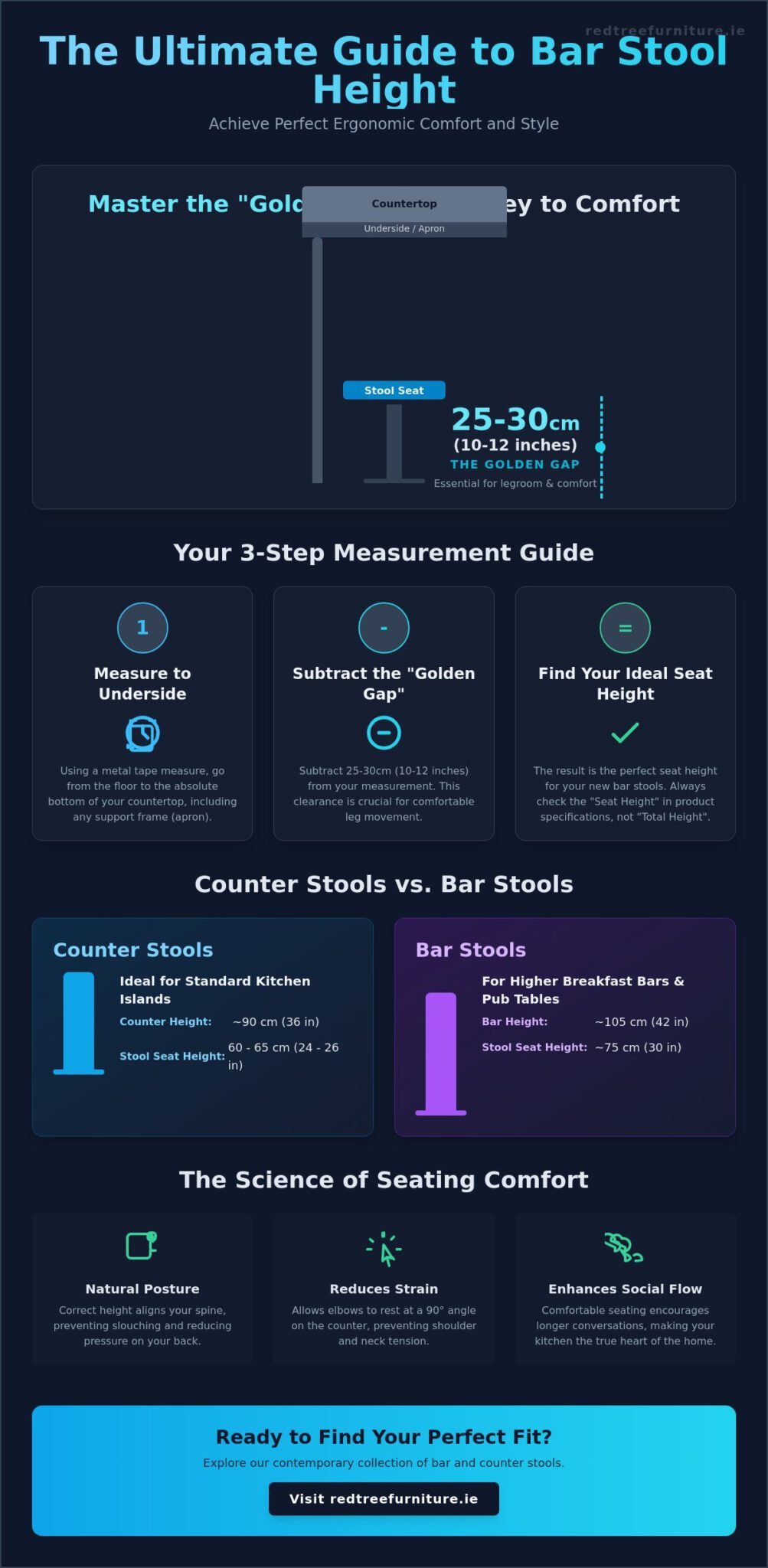
- Master the “Golden Gap” rule to ensure a perfect 25cm to 30cm clearance between your seat and the counter for ultimate legroom.
- Learn exactly how to choose the right height bar stool by measuring from the floor to the absolute underside of your worktop while accounting for the supporting apron.
- Identify the critical differences between counter stools (60cm-65cm) and professional bar stools (75cm) to avoid common ordering mistakes.
- Balance social functionality and visual style by choosing between 360-degree swivel mechanisms and streamlined backless designs.
- Discover how to create a cohesive interior by coordinating your seating with contemporary dining tables and sideboards.
The Science of Seating: Why Bar Stool Height is the Key to Comfort
The kitchen island has evolved into more than just a prep station; it’s the social epicenter of the modern home. Whether you’re hosting a casual Sunday brunch or helping the kids with homework while you cook, the comfort of your seating determines how long people stay. If you’ve ever found yourself hunched over a plate or swinging your legs because the seat is too high, you’ve felt the physical toll of poor ergonomics. Understanding how to choose the right height bar stool starts with recognizing that comfort is a precise calculation, not a guess.
The most critical measurement in your kitchen isn’t the height of the ceiling or the width of the island, but the “Golden Gap.” This refers to the 25cm to 30cm of clearance between the top of the stool seat and the underside of the counter. This specific window of space allows for natural leg movement and prevents the dreaded “knee-to-counter” collision. In many bespoke Irish kitchens, where worktops are often custom-fitted to the homeowner’s height, relying on a generic furniture label can lead to a frustrating design mistake that ruins the flow of your room.
The Ergonomics of a Modern Breakfast Bar
Proper seating ergonomics are about maintaining a natural posture. When you sit at a counter, your elbows should rest comfortably on the surface at roughly a 90-degree angle. This alignment prevents strain on your shoulders and neck. If the stool is too low, you’ll find yourself reaching up, which creates tension in the upper back. Conversely, sitting too high forces you to slouch, putting unnecessary pressure on your spine. Beyond the physical, there’s a psychological element at play. Sitting too low often makes guests feel like children at the adult table, subtly discouraging long conversations and dampening the relaxed social atmosphere you’ve worked hard to create.
Standard Labels vs. Real-World Measurements
You shouldn’t trust a “standard” label blindly. While there are general standard bar stool dimensions used across the industry, discrepancies between European and UK or Irish manufacturing are common. A European “counter” height might differ slightly from what an Irish joiner considers standard for a custom island. When you are researching how to choose the right height bar stool, always look for the specific “Seat Height” in the product specifications rather than the “Total Height.” The total height includes the backrest, which tells you nothing about where your legs will actually go. Measuring to the absolute underside of your specific worktop is the only way to ensure your new stools provide the ergonomic support your lifestyle requires.
Measuring Your Space: A Step-by-Step Guide to Getting it Right
Precision is the hallmark of a well-curated home. While a visual estimate might work for a throw pillow, understanding how to choose the right height bar stool requires a more disciplined approach to measurement. To ensure your kitchen remains a place of comfort rather than a series of cramped encounters, follow these five essential steps to find your perfect fit.
Step 1: Floor to Underside. Use a metal tape measure for total accuracy; soft fabric rulers can stretch and lead to errors. Measure from the floor to the absolute underside of your worktop. Many homeowners make the mistake of measuring to the top surface, but your legs live beneath that line. For those seeking expert advice on buying bar stools, the most overlooked detail is the structure beneath the surface.
Step 2: Account for the “Apron.” The apron is the supporting frame that sits under the counter surface. If you have a chunky 40mm marble island, that apron might be significantly deeper than a slim 12mm ceramic top. You must measure to the lowest point of this frame to ensure your knees don’t collide with the woodwork.
Step 3: Subtract the Golden Gap. Once you have your floor-to-underside measurement, subtract 25cm. This leaves you with the ideal seat height. This 25cm gap is the standard for comfortable movement and easy entry and exit.
Step 4: Determine Width and Quantity. Measure the total length of your island. To avoid a cluttered look, you need to know how many stools can breathe in the space. A crowded island loses its contemporary appeal and becomes a functional obstacle.
Step 5: Factor in the Compression Gap. If you’re eyeing a plush, upholstered stool, remember that the seat will sink when you sit down. High-quality foam can compress by 2cm to 3cm. While this adds comfort, it’s a detail to keep in mind if you’re on the boundary between two height categories.
The Floor-to-Underside Rule
Measuring to the top of your counter often leads to stools that are too high, forcing you to hunch over your meals. The underside measurement is the only metric that guarantees adequate legroom and ergonomic alignment. By focusing on the clearance rather than the surface, you ensure that every guest, regardless of height, feels perfectly positioned at your island.
Calculating Stool Quantity and Lateral Spacing
Spacing is just as vital as height. We recommend leaving at least 15cm of “elbow room” between each stool. If you choose stools with a swivel function, you may need to increase this gap to 20cm to prevent seats from knocking into each other during use. If your island feels too small for the number of guests you host, a stylish sideboard nearby can provide essential storage for glassware and linens, freeing up the island for seating alone. Once you have your measurements, you can confidently explore our collection of contemporary stools to find the perfect foundation for your stylish life.
Understanding the Categories: Counter Stools vs. Bar Stools
Labels like “Counter” and “Bar” are often used interchangeably in casual conversation, but in the world of interior design, they represent distinct measurements that dictate your daily comfort. If you’re wondering how to choose the right height bar stool, you first need to identify which architectural category your furniture falls into. Most modern Irish kitchens feature an island that sits at 90cm, which requires a counter stool with a seat height between 60cm and 65cm. In contrast, a true bar stool is designed for taller surfaces, typically around 105cm, and features a seat height of approximately 75cm. Choosing the wrong one can lead to the “Golden Gap” being either too narrow for your legs or too wide for you to reach your plate.
For those with truly unique spaces, such as a raised basement bar or a viewing platform overlooking a garden, spectator height stools reach 85cm to 90cm. These are rarer but essential for specific commercial-grade heights. If your measurements fall between these standard brackets, or if you simply want flexibility for guests of different heights, adjustable gas-lift stools are an excellent investment. They take the guesswork out of how to choose the right height bar stool and ensure your seating remains versatile as your home life evolves. These adjustable models are particularly useful in busy households where both children and adults share the same social space.
Kitchen Island Stools (Counter Height)
Counter height stools are the most popular choice for modern open-plan living because they sit flush with the rest of your kitchen worktops. This creates a seamless visual flow that doesn’t obstruct the view of your living area. To maintain a cohesive aesthetic, consider how these stools pair with other focal points, such as your ceramic dining tables or sideboards. Choosing stools with low-profile backs or backless designs can keep the island view clear, making the room feel larger and more inviting. It’s a subtle design trick that prioritizes light and space without sacrificing a place to sit.
High Bar and Commercial Stools
Dedicated home bars or basement lounges often utilize a taller profile to mimic a professional hospitality environment. When you opt for a 75cm seat height, the inclusion of a sturdy footrest becomes non-negotiable. Without a place to rest your feet, leg fatigue sets in quickly, making long periods of sitting uncomfortable. Stability is another critical factor for these taller models. Look for stools with a weighted base or a wide leg stance to ensure safety, especially if the stool features a swivel mechanism. A well-balanced, high-profile stool provides a sense of quiet confidence, allowing you to enjoy your evening in total relaxation.
Beyond Height: Functional Features and Aesthetic Harmony
While technical measurements provide the foundation, the true joy of a kitchen island comes from the features that support your daily rhythm. Once you’ve mastered how to choose the right height bar stool based on your counter’s underside, it’s time to look at the “swivel factor.” In a social, open-plan Irish home, 360-degree rotation is a game-changer. It allows you to pivot effortlessly between a conversation in the living room and a simmering pot on the stove. However, keep in mind that swivel stools require slightly more breathing room than fixed ones; aim for a generous clearance between seats to prevent them from knocking together during a lively gathering.
Versatility often comes in the form of gas-lift mechanisms. These adjustable stools are a brilliant choice if you’re worried about getting the height exactly right or if you have a household with varying needs. They allow a child to sit high enough for breakfast and an adult to lower the seat for a comfortable evening drink. When selecting your materials, consider the balance between luxury and longevity. Sophisticated velvet finishes add a layer of tactile richness to a room, while easy-clean faux leather offers a practical, wipe-down solution for busy families who practically live at their kitchen island. This flexibility takes the stress out of how to choose the right height bar stool for a multi-generational home.
The Impact of Backrests and Armrests
The silhouette of your stool significantly affects the visual flow of your kitchen. High-back stools offer the kind of support needed for primary dining, much like choosing the right dining chairs for your main table. However, if your goal is to maintain a clean, minimalist line, backless stools are a superior choice as they tuck completely out of sight. A critical check many homeowners overlook is armrest height. If your stool has arms, ensure they are low enough to slide under the counter apron. If they aren’t, they’ll sit perpetually in the walkway, creating a physical and visual obstacle that disrupts the harmony of the room.
Upholstery and the “Compression Factor”
Comfort is often found in the subtle details of the cushion. A plush 5cm foam seat might look perfect on paper, but it will likely compress by about 2cm once someone sits down. This compression factor is why upholstered stools often feel more forgiving than hard-seated wooden or metal alternatives. If you prefer the sleek look of a hard seat, your height selection must be even more precise because there is zero give in the material. For kitchen-adjacent fabrics, look for performance textiles that offer spill resistance. This ensures that a stray splash of coffee or wine doesn’t ruin your beautiful new investment.
Ready to find the perfect blend of style and substance for your kitchen? Browse our full collection of contemporary bar stools to find a design that fits your life perfectly.
Choosing Your Style: Red Tree Furniture’s Contemporary Collection
At Red Tree Furniture, we view our collection not just as a list of items, but as the foundation for your most cherished home moments. Once you’ve navigated the technicalities of how to choose the right height bar stool, the focus shifts to the emotional and aesthetic impact of your choice. Our curated range is designed specifically for the modern Irish home, where the kitchen is the true heart of the household. We prioritize a design-led approach that ensures your stools are as visually striking as they are structurally sound, blending aspirational style with down-to-earth practicality.
Achieving a “Showroom Feel” in an open-plan living space requires a delicate balance of coordination. Your bar stools shouldn’t exist in isolation. Instead, they should speak to the textures and tones of your existing dining table. Whether you’ve opted for the cool elegance of marble or the natural warmth of wood, your seating should bridge the gap between prep areas and dining zones. This cohesive approach creates a sense of intentionality that makes high-end interior design feel achievable and lived-in for every family.
Materials That Make a Statement
Texture plays a vital role in the atmosphere of your kitchen. For those seeking a touch of accessible luxury, our velvet stools provide a soft, inviting finish that contrasts beautifully against smooth stone or ceramic worktops. If your kitchen is a high-traffic family zone, industrial metal frames paired with sleek faux leather offer the durability needed to withstand daily life. To extend this visual harmony throughout your home, consider how these materials complement the coffee tables in your adjacent lounge. This creates a rhythmic flow of design that ties the entire ground floor together into one unified living experience.
The Red Tree Promise: Quality and Integrity
As a family-owned business, we take immense pride in the longevity of the pieces we bring into your home. We understand that knowing how to choose the right height bar stool is only half the battle; the other half is trust in the quality of the craftsmanship. You can visit us in person to give our stools the “Bum Test” and experience the comfort firsthand, or you can order with absolute confidence through our online store. Our team is deeply rooted in local service, ensuring that every piece we sell meets our high standards for both fashion and function. Ultimately, the right height is the foundation of home hospitality, turning a simple seat into the best spot in the house.
Elevate Your Home with Perfect Seating
Mastering how to choose the right height bar stool is about more than just numbers; it’s about creating a space where family and friends genuinely want to gather. By prioritizing the 25cm Golden Gap and measuring to the absolute underside of your specific worktop, you ensure every morning coffee and evening meal is a moment of total ergonomic comfort. These small details are what transform a functional kitchen island into the stylish heart of your home.
As a family-owned Irish business since 2007, Red Tree Furniture is proud to offer design-led contemporary pieces that blend beauty with durability. We provide national delivery across Ireland, making it easier than ever to complete your interior vision. Explore our curated collection of contemporary Bar Stools today and find the perfect match for your lifestyle. We’re excited to help you turn your house into a haven of stylish, comfortable living.
Frequently Asked Questions
What is the standard height for a kitchen island stool in Ireland?
Most modern Irish kitchen islands are constructed to a standard height of 90cm from the floor to the worktop surface. For these islands, you should select counter stools with a seat height between 60cm and 65cm. This specific range ensures you have enough clearance to sit comfortably without your knees hitting the underside of the counter.
How much legroom do I need under a breakfast bar?
You should aim for a gap of 25cm to 30cm between the top of the stool seat and the underside of your breakfast bar. This “Golden Gap” provides ample room for your legs to move freely and allows you to cross your legs comfortably. If your counter has a deep supporting frame or apron, make sure you measure from the bottom of that frame to ensure the gap remains sufficient.
Can I use a bar stool at a standard dining table?
No, bar stools are generally too tall for a standard dining table, which typically sits at a height of 75cm. Using a stool at this height would leave you with very little legroom and force you into an uncomfortable, hunched posture. For standard tables, it is best to choose from our collection of dining chairs or dining benches, which are designed for that specific height.
Are adjustable gas-lift stools as stable as fixed-height stools?
High-quality gas-lift stools are very stable, provided they feature a wide, weighted base to prevent tipping. While fixed-height stools offer a classic, sturdy silhouette, adjustable models are an excellent solution when you are figuring out how to choose the right height bar stool for a bespoke or non-standard island. They offer the flexibility to accommodate both children and adults at the same surface.
How many bar stools can I fit along a 2-metre island?
You can typically fit three stools along a 2-metre island while maintaining a comfortable social atmosphere. Each person generally requires about 60cm to 75cm of lateral space to eat and move without bumping elbows. By leaving a 15cm gap between each stool, you ensure the seating area looks organized and remains functional for daily use.
Do bar stool armrests usually fit under the counter?
Armrests do not always fit under a counter, so you must check the “Arm Height” specification before making a purchase. If the armrests are higher than the underside of your worktop, the stools won’t tuck away, which can obstruct walkways in smaller kitchens. If space is a priority, consider low-back or backless designs that slide completely under the counter when they aren’t being used.
What is the difference between a counter stool and a bar stool?
The difference is entirely down to the seat height and the surface they are paired with. Counter stools have a seat height of 60cm to 65cm and are made for 90cm kitchen islands. Bar stools are taller, with a seat height of roughly 75cm, and are designed for professional-style bar counters that typically stand at 105cm high.
How do I measure for a bar stool if my floor is uneven?
If your floor is uneven, take measurements at three different points along the island and use the shortest measurement as your guide. This ensures that the stools you choose will fit comfortably at any position along the counter. When learning how to choose the right height bar stool for older homes with characterful floors, choosing stools with adjustable leveling glides can also help provide a stable, wobble-free experience.