
Imagine it is 6:00 PM on a Saturday in a busy Cork household, and three unexpected guests have just arrived for dinner. You are staring at a compact four-seater that suddenly feels far too small for the evening ahead. We all know the struggle of wanting a home that feels open and airy for daily life while still being ready for those big, joyful celebrations. Finding the perfect extendable dining table is the secret to mastering this balance without cluttering your floor space or compromising on style.
You deserve a home that works for you, not against you. In this guide, we will show you how to measure for that essential 90cm of chair clearance, select smooth mechanisms that won’t strain your back, and choose high-end finishes that look seamless even when fully extended. We are diving into everything you need to know to transition from a quiet family breakfast to an eight-person dinner party with total confidence and ease. Let’s find the piece that makes your Irish home the heart of every gathering.
Key Takeaways
- Discover how to balance intimate family meals with the tradition of the Irish Sunday dinner by choosing a versatile centerpiece that adapts to your hosting needs.
- Explore the pros and cons of different extension mechanisms, from the seamless butterfly leaf to space-saving gateleg designs, to find your perfect fit.
- Identify which premium materials, like heat-resistant ceramic or timeless wood, best hide extension seams while standing up to the rigours of modern Irish living.
- Master the art of measuring your room to ensure your extendable dining table fits comfortably when closed and leaves plenty of clearance for guests when fully extended.
- Learn how Red Tree Furniture’s commitment to design-led quality and local Irish integrity helps you transform your dining room into a stunning, functional sanctuary.
Why the Extendable Dining Table is the Heart of the Modern Home
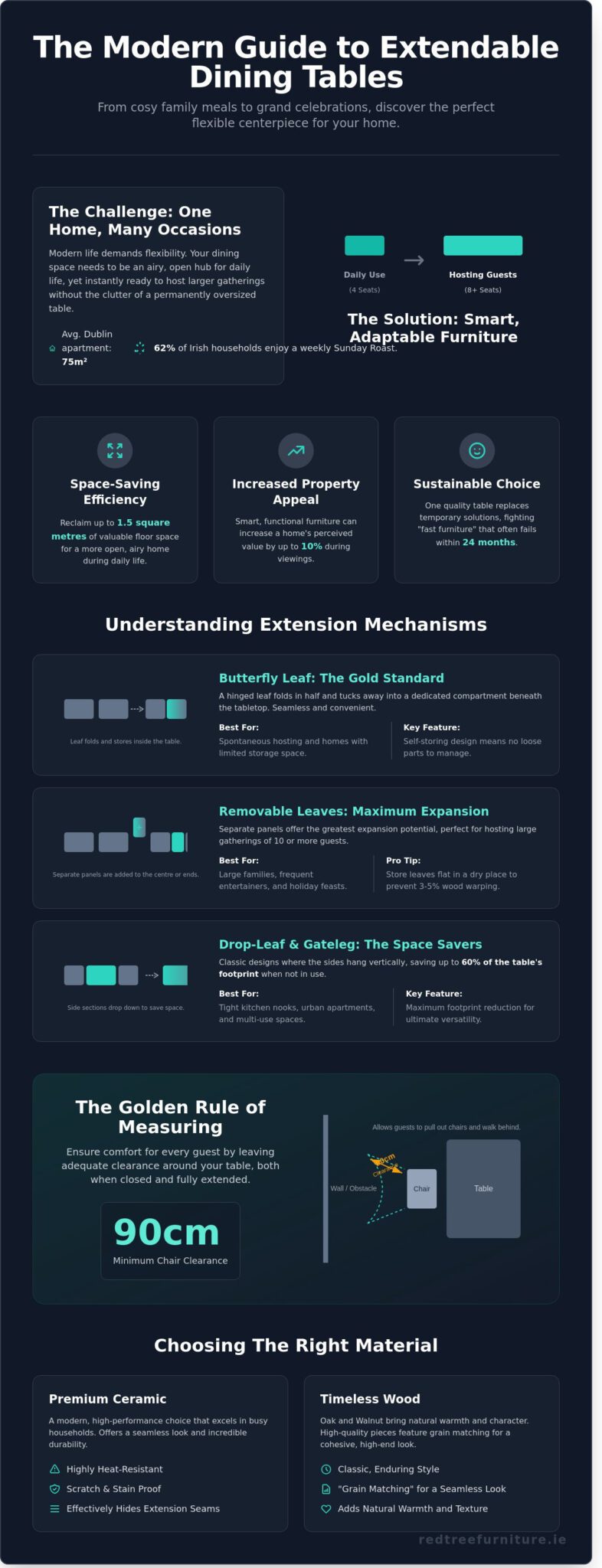
An extendable dining table is a masterclass in functional design, featuring hidden leaves or clever internal mechanisms that allow the surface area to expand in seconds. In the Irish home, this flexibility isn’t just a luxury; it’s a necessity. Recent 2023 consumer surveys indicate that 62% of Irish households still prioritise the traditional Sunday roast as a primary weekly gathering. A table that sits four for a quiet Tuesday breakfast but effortlessly accommodates eight for a family feast ensures your home remains the social hub of the neighborhood. It removes the psychological stress of hosting, providing a home that’s always guest-ready without the daily clutter of an oversized, static piece of furniture.
Contemporary living often requires us to do more with less. In cities like Dublin or Cork, where apartment sizes average around 75 square metres, floor space is at a premium. Choosing a versatile table allows you to maintain an airy, open-plan feel while keeping your options open for celebrations. It’s about the quiet confidence of knowing your furniture can adapt as quickly as your plans do.
The Evolution of Dining: From Fixed to Flexible
Formal, cordoned-off dining rooms are becoming a thing of the past. A 2023 report on Irish housing trends shows that 75% of new residential builds now favour open-plan layouts. This shift has transformed the dining table into a multi-functional workhorse; it’s a home office at 9:00 AM, a crafting station at 4:00 PM, and a dinner spot by 7:00 PM. Investing in an extendable dining table represents “affordable luxury” because it grows with your family. A young couple might start with a compact circular model that later expands to suit a growing household, ensuring the piece remains a timeless staple for a decade or more.
Key Benefits of Investing in an Extension
- Space-saving efficiency: Retracting your table during the work week can reclaim up to 1.5 square metres of floor space, vital for maintaining a flow in smaller homes.
- Increased property appeal: Smart, functional interior design is proven to increase a property’s perceived value by up to 10% during viewings, as buyers look for “clever” living solutions.
- Sustainability: One high-quality, crafted table replaces the need for cheap, temporary folding solutions. This reduces the carbon footprint associated with “fast furniture” that often breaks within 24 months.
Understanding Extension Mechanisms: Which is Right for You?
Choosing an extendable dining table isn’t just about the finish or the shape; it’s about the engineering that makes your home more functional. In 2024, approximately 72% of Irish homeowners prioritize multi-functional furniture to make the most of their floor space. The mechanism you select dictates how quickly you can transition from a quiet family breakfast to a full dinner party for ten people.
The Butterfly Leaf: Elegance and Ease
The butterfly leaf is often called the gold standard for integrated storage. This clever design features a hinged leaf that folds in half and tucks away into a dedicated compartment beneath the table top. It’s a favorite in design-led Irish homes because it eliminates the need to find extra storage space in a hallway cupboard or under a bed. While you’ll notice a small seam in the centre of the table, the convenience is hard to beat. It’s the perfect solution for those who love spontaneous hosting but don’t want the hassle of carrying heavy table parts from another room.
Removable Leaves vs. Fixed Extensions
If you regularly host large gatherings of 10 or more guests, removable insert leaves offer the greatest expansion potential. These separate panels are added to the centre or the ends of the table to create a massive dining surface. When buying wooden tables, it’s vital to look for “grain matching.” High-quality oak or walnut pieces ensure the natural wood patterns flow continuously across the extension, maintaining a high-end look. Because Irish homes can experience humidity shifts, you should store these leaves flat in a dry environment to prevent the 3% to 5% warping that can occur with natural timber.
Other popular options cater to specific architectural needs:
- Drop-Leaf and Gateleg: These classic designs allow the sides to hang vertically, saving up to 60% of the table’s footprint when not in use. They’re ideal for tight kitchen nooks in urban apartments.
- Contemporary Sliding Mechanisms: Modern designs often use ball-bearing runners for effortless, one-handed operation. These are perfect for busy households where time is at a premium.
Whether you’re furnishing a compact terrace house or a sprawling country kitchen, the right mechanism ensures your furniture grows with your needs. If you’re ready to find a piece that combines this practical engineering with beautiful design, you can explore our curated collection of dining solutions. High-grade steel runners and precision-cut hinges ensure these tables remain a reliable centerpiece for your home for years to come.
Choosing the Right Material: Ceramic, Marble, and Wood
Selecting a material for your extendable dining table involves a careful balance between daily durability and the visual impact of the extension seams. In a seamless design, the goal is often to hide the join where the table pulls apart. Natural textures and matte finishes are particularly effective at this. While a high-gloss surface might highlight a gap, a textured wood grain or a variegated stone pattern makes the transition look like an intentional part of the furniture’s character.
The Case for Ceramic in Extendable Designs
Ceramic has quickly become the preferred choice for Irish families who refuse to sacrifice style for function. This material is incredibly dense, having been fired at temperatures reaching 1,200 degrees Celsius. It’s completely heat-resistant, meaning you can place a hot pot directly on the surface without a trivet. Because ceramic surfaces are printed with sophisticated patterns that mimic natural stone, the join lines of an extension leaf are practically invisible to the naked eye. It’s a forgiving material that stays looking pristine even after years of homework sessions and Sunday roasts.
Ceramic stands as the definitive hero material of 2026 dining trends because it effortlessly marries high-end Italian aesthetics with the rugged durability required for modern family life.
Wood and Marble: Balancing Style with Maintenance
Wooden tables bring a timeless, organic warmth to the home that synthetic materials can’t quite replicate. When choosing a wooden extendable dining table, look for high-quality ball-bearing runners. These ensure the mechanical movement stays smooth for years. You’ll want to apply a specialized furniture wax every six months to keep the timber supple and prevent the joints from sticking. Solid oak or walnut remains a top choice for those who value a piece that patinas beautifully over time.
Marble and glass represent the pinnacle of sophisticated dining. These materials reflect light beautifully, making a smaller dining room feel more expansive and airy. Keep in mind that marble is naturally heavy. A 20mm thick marble top adds significant weight to the extension mechanism; therefore, it’s vital to choose a table with a reinforced steel frame. To finish the space, select comfortable dining chairs that complement the visual weight of your table. A heavy marble top often pairs best with upholstered chairs to soften the overall aesthetic and create a welcoming atmosphere for your guests.
How to Measure Your Space for an Extendable Table
Measuring for an extendable dining table requires a two-step approach to ensure the piece works for both quiet family dinners and lively celebrations. You must first measure the “closed” footprint to guarantee a comfortable daily traffic flow. A table shouldn’t obstruct the natural path to the kitchen or garden doors during the week. Check for fixed obstacles like radiators or low windowsills. In many Irish terrace houses, a radiator can take up 15cm of depth, potentially pushing your table off-centre and disrupting the room’s symmetry.
The 90cm Rule is your most reliable guide for comfort. Always aim for 90cm of clearance between the table edge and the nearest wall or sideboard. This specific distance allows guests to pull their chairs out and stand up without hitting the furniture behind them. When the table reaches its full extension, ensure you still maintain at least 60cm of “walk-around” space. This prevents your dining room from feeling like a bottleneck when you’re moving between the kitchen and the guests.
The Golden Rules of Dining Room Clearance
Comfort starts with elbow room. Each person requires a minimum of 60cm of table width to enjoy a meal without clashing cutlery. For narrow Irish homes or galley-style dining areas, use masking tape to outline the table’s fully extended dimensions on the floor. Leave the tape there for 24 hours. It’s the best way to see if the extended length blocks access to cupboards or forces a cramped walking path. This simple visual check saves you from the frustration of a beautiful table that simply doesn’t fit the reality of your architecture.
Seating Capacity vs. Table Shape
Shape dictates how efficiently a room handles a crowd. Round tables that extend into ovals are excellent for smaller, square rooms because the lack of sharp corners creates a smoother flow. If your dining area is multi-functional, dining benches are a clever space-saving alternative to traditional chairs. They slide completely under the table when not in use, reclaiming nearly 45cm of floor space on each side. When choosing your table, look at the leg placement. Pedestal bases are ideal for squeezing in an “extra” person because they eliminate the awkward struggle of sitting astride a table leg.
Ready to find a centerpiece that fits your home perfectly? Explore our range of expertly crafted dining furniture today.
Redefining Your Home with Red Tree Furniture
Red Tree Furniture remains deeply committed to providing design-led, contemporary pieces specifically for the Irish market. As a family-run business, we’ve spent over 15 years building a reputation for integrity and style. We know that modern Irish homes often face space constraints; that’s why our curated collection of extendable tables is designed to solve these exact dilemmas. Whether you’re hosting a small family brunch or a full holiday dinner for 12 people, our furniture adapts to your life. We believe that choosing an extendable dining table should be an investment in both your home’s aesthetic and its daily functionality.
Craftsmanship and Longevity
We prioritise durable mechanisms that stand the test of time. Every piece in our showroom features high-grade steel glides or smooth-action butterfly leaves tested for over 5,000 cycles of use. This dedication to quality ensures your table remains as sturdy on year ten as it was on day one. We call this “affordable luxury.” It’s about delivering the high-end feel of a €2,500 designer piece at a price point that makes sense for the average Irish household. Your furniture should reflect your personal style, whether that’s the clean lines of Scandinavian oak or the bold statement of sintered stone.
Complete the Look
Your extendable dining table is the centerpiece, but it doesn’t work alone. You can pair your chosen table with our collection of ergonomic chairs and matching sideboards to create a cohesive interior. For daily use, keep the table closed and styled with a simple ceramic vase. When guests arrive, extend the surface and layer it with linen runners to transform the room. You’re invited to Discover the Red Tree Furniture Extendable Dining Collection and find the piece that finally makes your dining room feel complete.
- Over 15 years of experience serving the Irish market.
- Mechanisms tested for 5,000+ uses to ensure longevity.
- A curated range of styles from industrial metal to traditional wood.
- Local service that understands the needs of the Irish home.
Elevate Your Dining Experience Today
Finding the right extendable dining table is the final piece of the puzzle in creating a home that’s both beautiful and functional. You’ve now seen how the right extension mechanism can simplify your life and why precise measurements are the secret to a comfortable room layout. Whether you choose the sleek resilience of our specialist ceramic finishes or the classic elegance of marble, your table should be a lasting investment. Since 2007, our family-owned Irish business has helped homeowners across the country find that perfect balance of high-end style and everyday durability. We take pride in providing furniture that handles the morning coffee rush just as well as it hosts a celebratory feast. With our dedicated national delivery service, we bring these contemporary designs directly to your doorstep anywhere in Ireland. It’s time to stop compromising and start enjoying a space that’s tailored to your lifestyle. We can’t wait to help you find a piece you’ll love for years to come.
Browse our Contemporary Extendable Dining Tables
Frequently Asked Questions
How many people can an extendable dining table typically seat?
An extendable dining table typically seats between 4 and 12 people depending on its starting dimensions. A standard 1.2 metre table comfortably fits 4 people; however, once extended to 1.8 metres, it easily accommodates 6 to 8 guests. For larger Irish family gatherings, choosing a 2.1 metre base that extends to 3 metres provides enough space for 12 adults to dine comfortably without feeling cramped.
Is it difficult to operate an extendable table by myself?
It’s not difficult to operate a modern table alone because of advanced engineering. Most contemporary designs feature smooth ball-bearing runners or butterfly mechanisms that allow one person to open the frame in under 20 seconds. You won’t need to struggle with heavy lifting; these systems are designed for fluid movement, ensuring you can prepare for guests quickly and without any physical strain.
Where do I store the extra leaves if they aren’t built-in?
You should store non-integrated leaves in a cool, dry place like a hallway closet or under a bed. It’s vital to lay them flat to prevent the wood from warping over time. Using a protective felt sleeve or the original cardboard packaging prevents scratches. About 40 percent of traditional designs require external storage, so ensure you have a dedicated 1 metre space available in your home.
Are extendable dining tables as sturdy as fixed-top tables?
High-quality extendable tables are just as sturdy as fixed-top versions when they feature reinforced steel tracks or solid oak supports. Premium models are tested to hold 50kg of weight on the extended sections, which is more than enough for heavy serving platters. Look for locking clips under the tabletop; these secure the leaves firmly in place to prevent any wobbling during a busy Sunday roast.
What is the best material for a low-maintenance extendable table?
Ceramic is the ultimate low-maintenance material for a busy home. It’s heat resistant up to 150 degrees Celsius and completely non-porous, so red wine spills won’t leave a permanent mark. Unlike solid wood which requires oiling every 12 months, a ceramic extendable dining table only needs a quick wipe with a damp cloth to stay looking pristine for years to come.
How do I clean the crumbs out of the extension mechanism?
You can easily remove debris by using a vacuum cleaner with a narrow crevice attachment. Open the table fully to expose the tracks and run the nozzle along the runners to suck up trapped crumbs. For stubborn dust, a soft-bristled paintbrush works wonders. Performing this simple maintenance every 6 months ensures the mechanism slides smoothly without any grinding or sticking when guests arrive.
Can I use an extendable table in a small kitchen?
You can definitely use an extendable design in a small kitchen to maximise your floor space. A compact 80cm round table is ideal for daily breakfast but can often stretch to 120cm to seat 6 people for lunch. This flexibility saves you about 1.5 square metres of floor space during the week, making your kitchen feel much more open and airy for daily tasks.
Do I need different sized tablecloths for an extendable table?
You’ll need two different tablecloths or one versatile runner to suit both configurations. A standard 140cm cloth works for daily use, but you’ll require a 250cm version for when the table is fully extended. Many Irish homeowners prefer using individual placemats instead; this avoids the hassle of storing multiple large linens and highlights the beautiful grain of the tabletop material during dinner parties.