
The secret to a truly high-end home isn’t found in a matching furniture catalogue; it’s found in the delicate art of intentional contrast. Many homeowners fear that their open-plan space will end up looking like a sterile showroom if they don’t buy every piece from the same collection. However, the most beautiful rooms in 2026 are those that embrace a curated approach to coordinating dining and living room furniture. You might feel uncertain about whether a sleek ceramic dining table can sit alongside a warm wooden TV unit without clashing. It’s a common hesitation, especially when you’re trying to balance the practical needs of a busy Irish household with the desire for a polished, “quiet luxury” aesthetic.
We’re here to help you bridge that gap with confidence. In this guide, you’ll discover how to create a sophisticated flow between your living and dining areas by focusing on shared material DNA rather than identical finishes. We’ll show you how to mix tactile textures like honed marble and rich walnut to ground your space. You will also learn practical layout strategies to define zones in your home without building walls. From choosing the right sideboards to selecting bar stools that complement your coffee table, we provide the expert insights you need to build a home that feels both cohesive and characterful.
Key Takeaways
- Identify the “visual thread” that connects your spaces to achieve a professionally curated look without the rigidity of matching sets.
- Master the art of coordinating dining and living room furniture by using durable, high-end materials like ceramic and marble to create a consistent sense of luxury.
- Discover how to define distinct zones in an open-plan layout using strategic furniture placement and negative space rather than physical partitions.
- Explore how versatile pieces like sideboards and console tables act as style anchors to unify your kitchen, dining, and lounge areas.
- Learn why experiencing textures and finishes in person is the essential final step in ensuring your furniture pieces harmonize perfectly.
The Art of Cohesion: Why Coordinating Your Living and Dining Spaces Matters
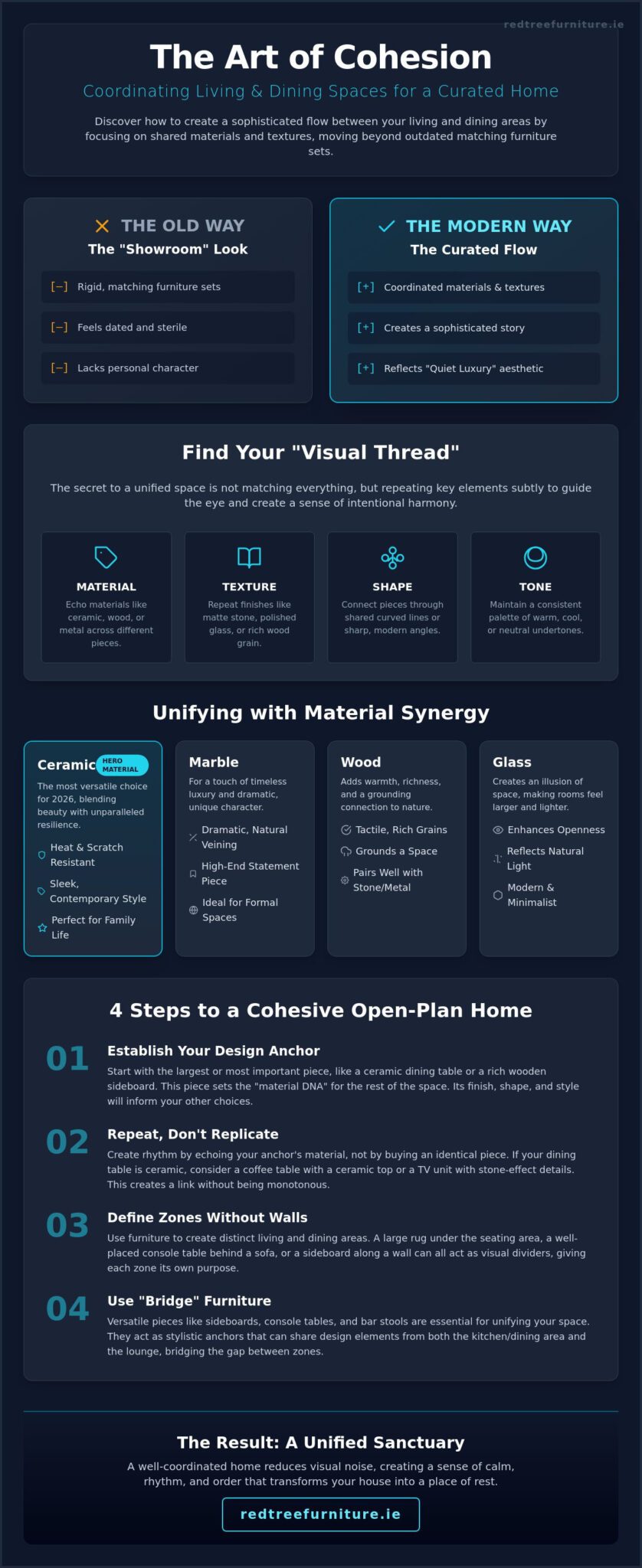
Cohesion is often misunderstood as simple uniformity. In reality, it acts as a visual thread that quietly guides the eye from one corner of a room to the next. For many Irish homeowners, the shift toward open-plan layouts means the kitchen, dining area, and lounge now share the same footprint. This architectural change demands a new approach to balance. Without a sense of harmony, these large spaces can feel disjointed or cluttered. By mastering the core principles of interior design, you can ensure that each piece of furniture feels like part of a larger, intentional story.
Contemporary style has moved away from the matching set look of the past. While buying a dining table and chairs that perfectly match your coffee table was once the standard, it now feels somewhat dated and sterile. Modern coordinating dining and living room furniture is about finding commonalities in material, shape, or tone. This approach creates a home that feels curated over time rather than purchased in a single afternoon. Beyond the aesthetic appeal, a cohesive home reduces visual noise, making your living environment feel more spacious and significantly increasing the perceived value of your property.
Defining Your Primary Design Anchor
Every successful room starts with a lead. This is your primary design anchor. Usually, this is the largest or most functional piece in the space, such as a substantial ceramic dining table or a rich wooden sideboard. This piece dictates the DNA of the room. If you choose a table with a matte stone finish, you might echo that texture in your lamp tables or the base of your TV unit. Your anchor must reflect your lifestyle. A family home might prioritise the heat and scratch resistance of ceramic, while a formal entertaining space might lean into the dramatic veining of a marble dining table.
The Psychology of a Unified Home
There is a profound psychological benefit to a unified living space. When textures and colours repeat subtly across a room, it creates a sense of rhythm and calm. Our brains naturally seek patterns. When we see a familiar wood grain on a console table that mirrors the legs of our dining chairs, it signals order. This sensory consistency transforms a house into a sanctuary. Moving from traditional, boxed-in rooms to fluid, modern living requires this level of detail to ensure the home feels like a place of rest rather than a chaotic mix of styles.
Material Synergy: Matching Ceramic, Glass, and Marble Across Rooms
Achieving a seamless transition between your dining area and lounge often comes down to the materials you choose to repeat. While wood has long been the default choice, 2026 is seeing a significant shift toward more tactile, resilient surfaces like ceramic, marble, and glass. These materials offer a shared language that makes coordinating dining and living room furniture feel effortless. By mirroring a specific finish across different functional pieces, you create a sense of material synergy that feels sophisticated and intentional.
Repetition is the key. If you have a marble dining table, you don’t necessarily need a marble coffee table to match. Instead, you might choose a lamp table with a similar marble base or a TV unit that features subtle stone-effect detailing. This creates a rhythm throughout the space without making it feel like you’ve bought a pre-packaged furniture set. It’s about finding those common threads that tie the room together while allowing each zone to maintain its own personality.
The Rise of Ceramic in Modern Irish Interiors
In the context of modern Irish homes, ceramic has emerged as the undisputed hero material. Unlike traditional wood, which can feel heavy or require frequent maintenance, ceramic dining tables Ireland provide a sleek, contemporary edge that is virtually indestructible. Ceramic is the most versatile material for 2026 interiors because it offers the raw beauty of natural stone with the resilience required for modern family life. Pairing a large ceramic dining table with a matching ceramic coffee table in the seating area creates an immediate visual link. This repetition of texture allows the eye to travel across the open-plan space without meeting a jarring change in style.
Balancing Hard Surfaces with Soft Accents
To prevent a room full of stone and glass from feeling cold, it’s vital to balance these hard surfaces with soft accents. This contrast is what makes a space feel welcoming rather than just impressive. Consider these strategies to soften your look:
- Pair a marble or ceramic table with upholstered dining chairs in rich velvet or supple leather to add instant warmth.
- Use a large, textured rug to ground your coffee table and sofa, creating a distinct island of comfort within the larger room.
- Soften the sharp lines of a glass console table by styling it with organic shapes, such as rounded ceramics or soft-focus wall mirrors.
The elegance of glass also plays a crucial role in smaller open-plan areas. Because glass is transparent, it helps maintain sightlines and keeps the room feeling airy. If you’re looking to elevate your space, you can explore our curated range of ceramic and stone surfaces to find the perfect anchor for your home.
Navigating Open-Plan Living: Flow Without Uniformity
Open-plan living is the hallmark of the modern Irish home, yet it presents a unique challenge: how do you define where the dinner party ends and the relaxation begins? Successfully coordinating dining and living room furniture in one large space isn’t about buying a matching suite. It’s about creating a rhythm that allows the eye to distinguish between zones while still feeling the pull of a single, unified environment. The goal is flow, not uniformity. When you achieve this balance, your home feels expansive yet intimate, professional yet personal.
One of the most effective ways to achieve this is through the strategic use of negative space. It’s tempting to fill every square foot, but leaving breathing room between your dining and living areas is what creates a sense of luxury. Think of negative space as the punctuation in your room’s story. It tells the viewer when one thought ends and another begins. You can further distinguish these zones by varying your lighting levels. Use a bright, focused pendant over the dining area to signal activity and social connection, while opting for softer, layered lamp light in the lounge to encourage rest. Maintaining a consistent colour palette doesn’t mean everything should be the same shade; instead, use tonal variations of a single hue to create depth and interest across the entire floor plan.
The Golden Rules of Furniture Placement
A common mistake is pushing all your furniture against the walls in an attempt to make the room feel larger. This often has the opposite effect, leaving a cold dead zone in the middle of the room. Instead, float your sofa to create a conversation circle that mirrors the social focus of your dining table. This arrangement creates a clear destination for guests and family alike. Ensure there are wide, unobstructed walkways between these two hubs. A path of at least 90cm allows for comfortable movement, preventing the space from feeling cramped or cluttered as you move from one zone to the next.
Using Sightlines to Your Advantage
Sightlines are the invisible lines that guide our gaze through a home. You can create a sense of calm by aligning the heights of your horizontal pieces. For instance, choosing TV units and sideboards that sit at a similar level creates a steady horizon line, which is naturally soothing to the eye. If your sofa backs onto the dining area, use a sleek console table as a buffer piece. This hides the back of the sofa and provides a surface for decorative accents that bridge the two zones. Finally, strategically placed wall mirrors can reflect light from the brighter dining zone into the darker corners of the living area, subtly tying the two spaces together through shared luminosity.
The Supporting Cast: Using Sideboards and Console Tables to Bridge the Gap
While the dining table and sofa often claim the spotlight, the true mastery of coordinating dining and living room furniture lies in the supporting cast. Pieces like sideboards, console tables, and TV units act as the connective tissue in an open-plan home. They provide the visual transitions that prevent a room from feeling like two separate spaces accidentally pushed together. By carefully selecting these occasional pieces, you can echo the materials and tones used in your primary zones, creating a home that feels curated and complete.
A well-placed sideboard often serves as the ultimate anchor. Positioned between the kitchen and the living area, it offers a functional surface that can reflect elements from both sides. You might style the top with a lamp that matches the living room’s ambiance, while the interior stores the fine glassware used at the dining table. This dual purpose makes it an indispensable tool for achieving harmony. Similarly, choosing TV units that mirror the leg finish of your dining chairs or the material of your table base creates a subtle but powerful sense of continuity.
Functional Elegance: Storage that Styles
In 2026, the demand for high-quality storage has evolved beyond simple utility. Every coordinated home needs a sideboard that balances sleek design with practical capacity. When choosing a finish, look for tones that complement your coffee table. If your coffee table features a warm walnut grain or a matte ceramic top, selecting a sideboard with similar characteristics reinforces the design language of the entire floor. A sideboard acts as a visual bridge between two functional zones by carrying the material DNA of the dining area into the relaxation space.
Occasional Furniture: The Finishing Touches
The smaller details often make the biggest impact on the sensory experience of a room. Console tables are incredibly versatile; they can define a hallway or sit behind a sofa to provide a surface for decor that mirrors your dining room’s aesthetic. Using these smaller pieces effectively is a masterclass in coordinating dining and living room furniture without overwhelming the senses. To add height and symmetry, consider incorporating lamp tables at the ends of your seating. These pieces prevent the layout from feeling flat and offer another opportunity to repeat textures like glass or stone.
For homes with a breakfast bar, choosing bar stools that match the upholstery or leg finish of your dining chairs is a clever way to pull the dining room’s style into the kitchen. You can then use wall mirrors to create a window effect, reflecting these coordinated materials and making the entire space feel more luminous and connected. If you are ready to find these bridging pieces, explore our full collection of sideboards and occasional furniture to complete your vision.
Choosing Your Foundation: How to Start Your Red Tree Furniture Journey
Choosing the right pieces for your home is a deeply personal journey. As a family-owned business, we believe that furniture should be more than just a functional purchase; it should be the foundation for a life well-lived. Our team understands the nuances of coordinating dining and living room furniture because we live and breathe these designs every day. We take pride in offering a level of personal service that larger, impersonal retailers simply cannot match. Whether you are furnishing a new build or refreshing a long-loved space, we are here to help you navigate the process with quiet confidence and expert care.
While digital galleries provide a wonderful starting point for inspiration, nothing replaces the tactile experience of a showroom visit. High-resolution images can hint at the beauty of a honed marble surface or the smooth finish of a ceramic tabletop, but feeling the weight and texture of these materials in person is essential. Seeing how light reflects off a glass dining table or observing the intricate veining in a stone coffee table allows you to visualise how these pieces will truly interact within your own environment. It is the final step in ensuring your chosen materials will harmonise perfectly across your open-plan zones.
Quality and Integrity in Every Piece
Our commitment to design-led, accessible luxury is at the heart of everything we do. We carefully curate our collections to ensure that every ceramic dining table, velvet chair, and wooden sideboard meets our high standards for both aesthetics and longevity. These materials are specifically chosen for the modern Irish home, where durability is just as important as style. We also take great pride in supporting both retail customers and trade professionals across the country. This dual focus allows us to stay at the forefront of contemporary trends while remaining deeply rooted in local service and regional domestic life.
Your Path to a Coordinated Home
The most successful interior projects often start with a single, bold decision. We recommend starting with your dining table, as it often serves as the primary design anchor for the entire space. Once you have selected your lead material, you can build outward, choosing sideboards, TV units, and coffee tables that echo that initial choice. Our team is always available to provide material-matching advice, helping you bridge the gap between different functional areas with ease. If you are ready to begin your home transformation, explore our contemporary dining furniture collections today and discover the pieces that will define your space for years to come.
Bringing Your 2026 Vision to Life
Mastering the balance of an open-plan home is about more than just picking a style; it’s about weaving a consistent material story from your dining table to your TV unit. By focusing on shared textures like resilient ceramic or dramatic marble, you can achieve a professional, curated look that feels both unified and personal. Remember that successful coordinating dining and living room furniture relies on those supporting pieces, like sideboards and console tables, to bridge the gap between functional zones with elegance and ease.
Since 2007, Red Tree Furniture has operated as a family-owned business dedicated to bringing high-end, accessible luxury to homes across the country. As a leading supplier of contemporary ceramic and marble furniture, we provide the quality and design integrity needed for a lasting home transformation. With national distribution across Ireland, your path to a sophisticated, seamless living space is closer than you think. We’re ready to help you find the foundation for a stylish and comfortable life.
Discover the Red Tree Furniture collection and start coordinating your home today. We look forward to helping you create a space that truly reflects your unique lifestyle.
Frequently Asked Questions
How do I coordinate my dining and living room in an open-plan house?
You can coordinate your dining and living room by focusing on shared material DNA or a consistent colour palette rather than buying matching suites. Use repeating elements, such as a specific metal finish on table legs or a stone texture on surfaces, to create a visual thread. This strategy ensures the space feels unified while allowing each zone to have its own personality. It’s the most effective way to master coordinating dining and living room furniture.
Should the dining table and coffee table match exactly?
No, your dining table and coffee table don’t need to be identical. In fact, a slight variation often looks more curated and professional. Aim for coordination through similar shapes or complementary materials instead. If you have a ceramic dining table, you might choose a coffee table with a matching ceramic top or one that shares a similar base design. This creates a sophisticated rhythm without the rigidity of a showroom set.
Can I mix different wood tones in the same large room?
Yes, you can mix wood tones as long as they share a similar undertone, such as warm or cool. Pairing a dark walnut TV unit with a lighter oak dining table works if you bridge the gap with a third element. A sideboard that incorporates both shades or a rug that features both tones can act as a mediator. This adds depth and character to the room while maintaining a sense of harmony.
What is the best material for a dining table in a high-traffic home?
Ceramic is widely considered the best material for high-traffic homes due to its extreme durability. It is heat, scratch, and stain-resistant, making it perfect for families who use their dining table for everything from homework to dinner parties. It offers the raw beauty of natural stone without the high maintenance of marble. Because it is so resilient, it stays looking new for much longer than traditional wood or glass surfaces.
How do I use a sideboard to separate my living and dining areas?
Position a sideboard behind a sofa or along a shared wall to act as a low-profile physical boundary. It provides a clear visual transition between the dining and lounge zones without blocking sightlines or natural light. Styling the top with decor that reflects elements from both areas helps the piece act as a stylistic anchor. This makes the sideboard a functional bridge that defines your layout while providing essential storage.
Do I need to have the same rug in both the living and dining zones?
You shouldn’t use identical rugs; instead, choose rugs that complement each other in texture or tone. Using different rugs actually helps define specific zones in an open-plan layout. For example, a low-pile rug under the dining table is practical for moving chairs, while a plush, textured rug in the living area adds comfort and warmth. Ensure the colours in both rugs belong to the same broader palette to maintain flow.
Is it okay to mix modern ceramic tables with traditional chairs?
Mixing modern ceramic tables with traditional chairs is a great way to create a transitional look that feels layered and personal. To make it work, ensure there is at least one common element, such as the colour of the chair legs matching the table base. This blend of old and new prevents the room from feeling too one-dimensional. It’s a confident design choice that suggests the furniture has been carefully curated over time.
How do I choose a colour palette that works for both rooms?
Start with a neutral base for your large furniture pieces and use accent colours to tie the two spaces together. If your living room features deep green cushions, you might echo that shade with a bowl on your dining table or a green-toned wall mirror nearby. This subtle repetition of colour across the zones creates a cohesive feel for coordinating dining and living room furniture without making the rooms look identical or forced.